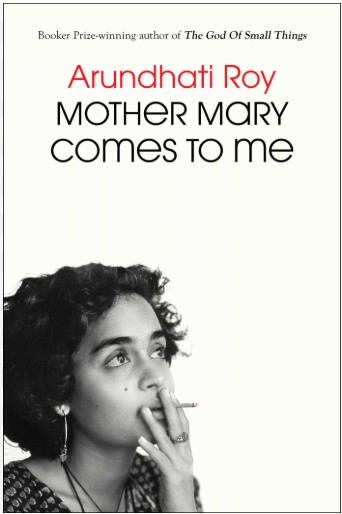
I picked up Mother Mary Comes to Me right after finishing Invisible Women by Caroline Criado Perez, a book that opened my eyes to the countless ways women are made invisible in a male-dominated world. Reading Arundhati Roy right after that felt almost like a living example of what Perez described. Roy’s presence, her unapologetic voice, her fearless analysis of power — she breaks through that silence and invisibility with every page.
This collection of essays is not light reading, nor is it meant to be. Roy’s words carry the weight of history, empire, capitalism, caste, and war. She speaks for those pushed aside by the machinery of progress — indigenous people displaced by dams, citizens crushed under authoritarian governments, victims of endless wars justified in the name of democracy. But what strikes me most is how she writes these truths not as cold analysis but as living, breathing testimony. Her prose is lyrical, almost poetic, but never soft — it pierces, it unsettles, it demands that you do not look away.
Reading Roy is like sitting with someone who refuses to let you forget. She forces us to confront realities we might prefer to ignore. Yet within her critique there is also beauty — she shows us that resistance can be fierce and tender at the same time. As I turned the pages, I found myself thinking about Palestine, about the silencing of voices in our own institutions, about all the ways power writes its own story and calls it truth. Roy insists on telling the other story — the one of those who resist, who survive, who refuse to disappear.
On a personal note, I found myself comparing my own work and reflections to hers. No, I am not Arundhati Roy, but like her I believe silence is complicity. I believe storytelling — whether on my blog, in conversations, or through the work I do — is part of resisting injustice. Roy reminded me that writing is not a hobby or luxury; it is a responsibility.
If Invisible Women showed me the structures that erase women, Mother Mary Comes to Me gave me a woman who cannot be erased. And perhaps that is why this book felt so powerful in this moment — because it proves that voices like hers, when heard, can shake empires.
This is not a book you read for comfort. It is a book you read because you want to see the world more clearly, however painful that clarity might be. And it is a book I hope many will pick up, especially now, when justice feels so fragile and yet so necessary.